
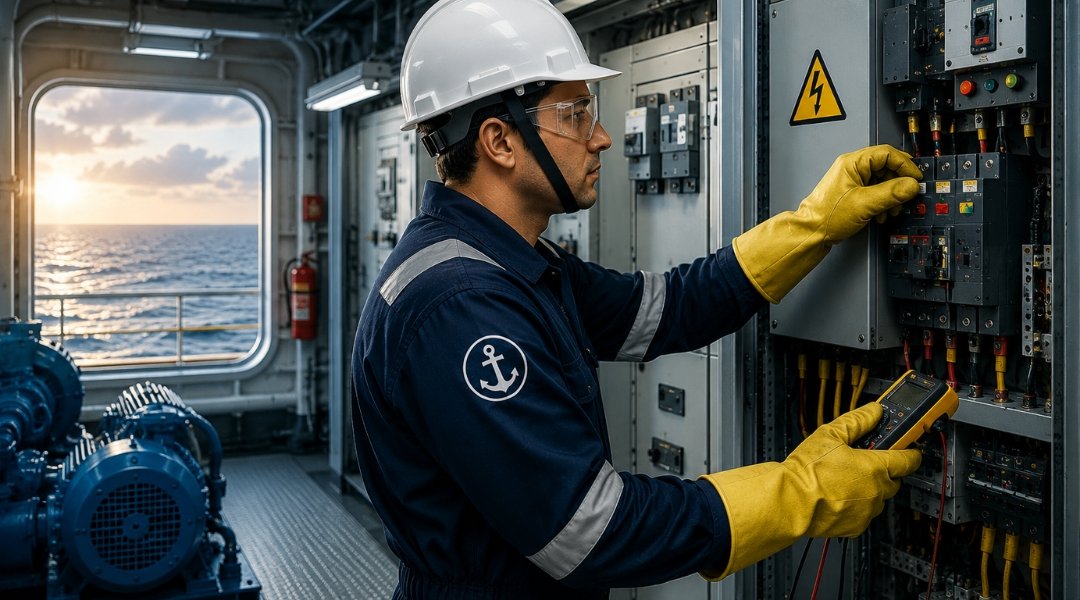
Modern ships today operate with advanced automation systems, intelligent engines, and high-voltage electrical equipment. As maritime technology continues to evolve, marine engineers are expected to safely handle complex electrical operations onboard.
High-voltage systems are essential for powering critical ship functions, but they also carry serious risks. Improper handling can lead to electrical shock, fire hazards, equipment damage, and operational failures. This is why High Voltage Safety Training has become an essential requirement for marine engineers working in the modern shipping industry.
The training helps engineers understand safe isolation procedures, high-voltage switching operations, emergency response techniques, and proper safety protocols while working with electrical systems onboard.
Practical Training Builds Confidence and Real-World Skills
One of the biggest advantages of High Voltage Safety Training is the practical exposure it provides to marine engineers. Modern maritime institutes now focus heavily on simulator-based learning to prepare candidates for real shipboard situations and operational challenges. Through this training, marine engineers gain practical understanding of high-voltage circuit operations, earthing and grounding procedures, vacuum circuit breaker handling, transformer operations, variable frequency drive systems, and emergency fault handling.
This practical approach not only improves technical confidence but also helps candidates perform better during competency examinations and onboard responsibilities. As smart ships and automated vessel systems continue to evolve, marine engineers with strong high-voltage competency and hands-on operational knowledge will continue to remain in high demand across the global maritime industry.
Why MECT Is the Right Choice for Marine Engineers
Choosing the right maritime training institute plays a major role in shaping a successful marine engineering career. Marine Education Charitable Trust (MECT) focuses on practical learning, industry-oriented training, and safety-focused education to prepare students for modern shipboard operations. With advanced simulators, experienced faculty, and DGS-approved courses, MECT helps students build the technical confidence and operational skills required in today’s maritime industry.
MECT provides full mission approved high-voltage simulators for practical shipboard training, allowing students to gain real-world operational exposure in a controlled learning environment. The institute is supported by experienced faculty members with strong maritime and technical expertise who guide students with both theoretical and practical knowledge. All courses are DGS-approved and aligned with current industry standards, ensuring quality training and industry relevance.
The institute places strong emphasis on hands-on learning, safety procedures, and career readiness to help students prepare for onboard responsibilities and future career opportunities.
As maritime technology continues to advance, the demand for skilled and technically competent marine engineers is also increasing globally. The right maritime training today can play a significant role in building a successful maritime career tomorrow.